Last Updated:

Publii Static CMS: A Technical Deep Dive into a Secure, Privacy-First, High-Performance Website Platform

Kaajoo Admin
Kaajoo Admin Insights

Modern web development has reached a paradox.

We have powerful frameworks, scalable hosting, and global CDNs—yet most websites today are:

  • Slower than necessary
  • Over-tracked
  • Vulnerable to common attacks
  • Tightly coupled to platforms and subscriptions

Publii addresses this problem by taking a fundamentally different approach.

Publii is a desktop-based Static CMS designed to create truly independent, secure, and privacy-first websites.
It eliminates databases, server-side execution, and platform dependencies—while still offering a full CMS workflow.

This article explores Publii from a developer and system-architecture perspective, covering features, security model, performance characteristics, privacy compliance, and real-world use cases. If you care about security, performance, privacy, and long-term maintainability, Publii is worth a serious look.

What Is Publii (Technically Speaking)?

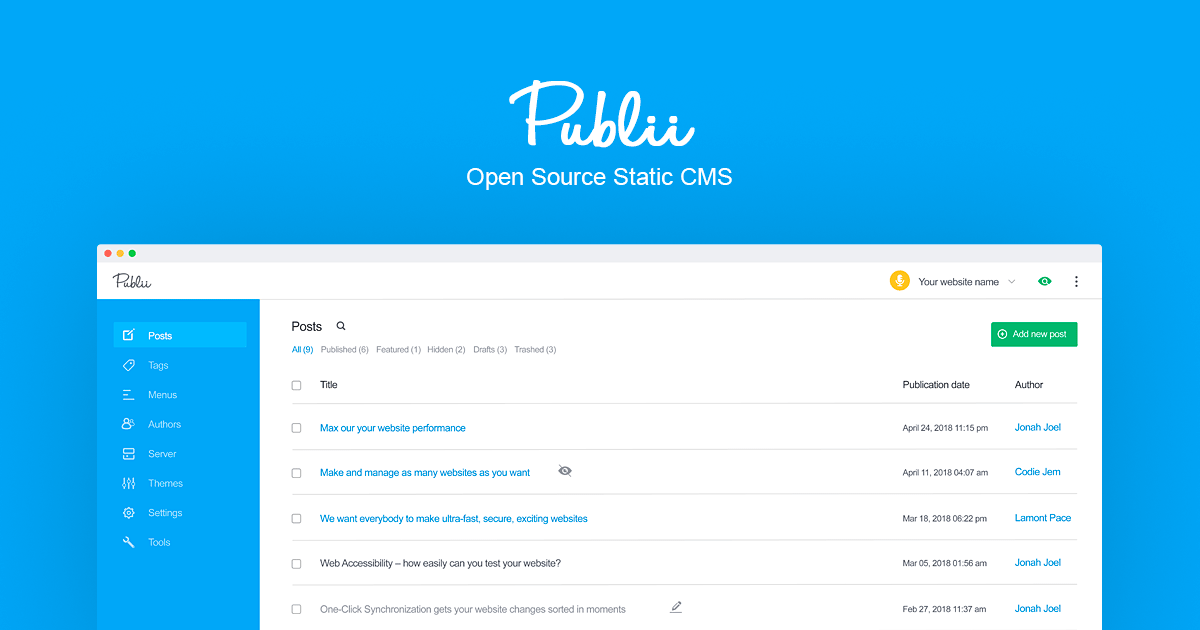
Publii is a static site generator with a CMS-style interface, packaged as a desktop application for macOS, Windows, and Linux.

Unlike traditional CMS platforms:

  • No runtime content rendering
  • No server-side logic
  • No database layer
  • No admin panel exposed to the internet

Publii generates pure static assets:

  • HTML
  • CSS
  • JavaScript

These files are then deployed to any static hosting environment.

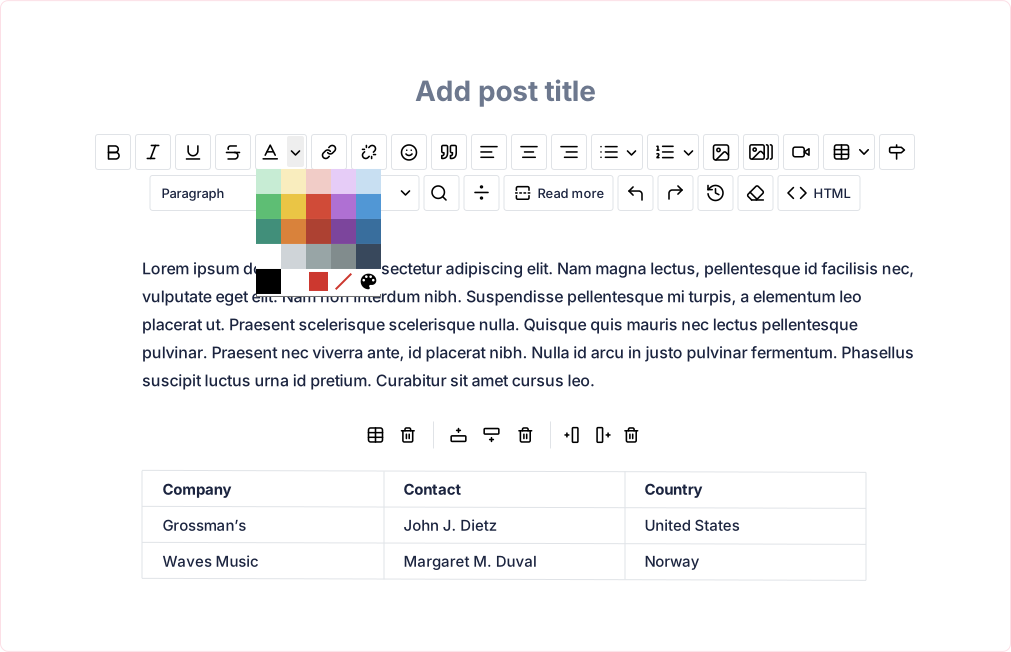
WYSIWYG editor
Source: Publii

Architecture Summary

Local Machine
├── Publii Desktop App
│   ├── Content Management
│   ├── Theme Engine
│   ├── SEO & Metadata
│   └── Static File Generator

└── Output
    ├── index.html
    ├── assets/
    ├── authors/
├── tags/
  └── media/

Once published, the site becomes immutable, cacheable, and attack-resistant.


Static CMS vs Traditional CMS (Why Publii Exists)

AspectTraditional CMSPublii
DatabaseRequiredNone
Server-side codePHP / NodeNone
Attack surfaceHighMinimal
PerformanceVariableExtremely fast
PrivacyOpt-inDefault
Hosting dependencyPlatform-basedAny static host
MaintenanceContinuousMinimal

Publii removes entire layers of complexity instead of trying to secure them.

ProblemTraditional CMSPublii
Database attacksPossibleImpossible
Server exploitsCommonNone
Admin brute forceRiskyDoesn’t exist
Performance tuningRequiredDefault
Privacy complianceExtra workBuilt-in

Security Model: Why Publii Is Inherently Secure

Security in Publii is architectural, not reactive.

No Database = No Database Attacks

  • No SQL injection
  • No credential dumping
  • No admin user tables

No Server-Side Runtime

  • No PHP exploits
  • No RCE vulnerabilities
  • No outdated frameworks running in production

No Public Admin Interface

  • Nothing to brute-force
  • No login endpoints
  • No attack vectors exposed

Static files served over HTTPS are about as secure as the web gets.

This makes Publii an excellent choice for:

  • Security-sensitive projects
  • Government or NGO websites
  • Compliance-heavy environments
  • Long-lived informational sites


Performance Characteristics (Core Web Vitals Friendly)

Because Publii outputs static assets:

  1. Time To First Byte (TTFB): near zero
  2. Full CDN compatibility
  3. Aggressive caching possible
  4. No backend latency

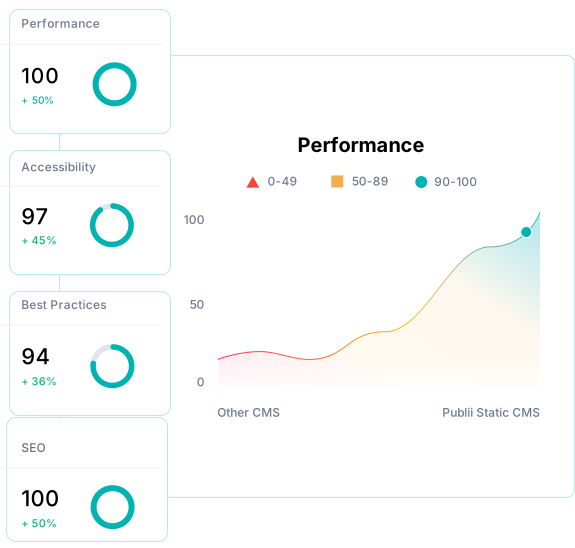
Publii sites typically score:

  • High on Lighthouse
  • Excellent on Core Web Vitals
  • Fast on mobile and low-bandwidth networks
Publii Content Tools
Source: Publii

Why It’s Fast

  • No server computation
  • No database queries
  • No runtime rendering
  • Minimal JavaScript footprint

Static performance is predictable—and Publii fully embraces that model.


Privacy-First by Design (GDPR & CCPA Compliance)

Publii does not ship with:

  • Analytics
  • Trackers
  • Cookies
  • Third-party scripts

This is critical.

Most CMS platforms require:

  • Cookie banners
  • Consent management
  • Legal configuration

With Publii:

  • No personal data is collected by default
  • No consent is required
  • No compliance gymnastics

GDPR & CCPA Ready Out of the Box

Privacy compliance is not a plugin—it’s the default state.

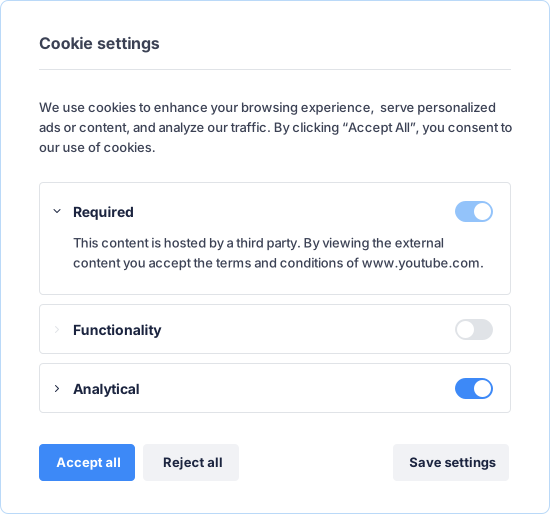
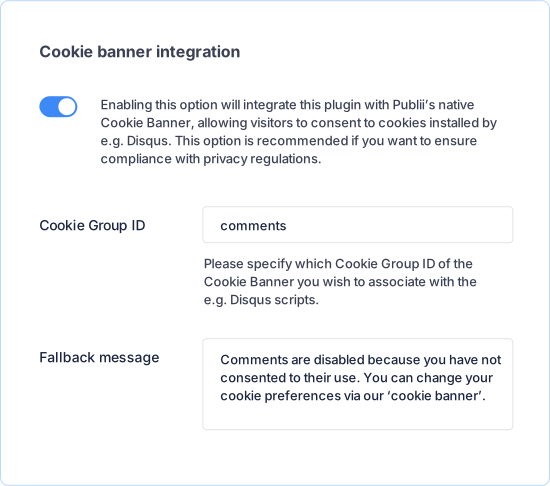
Advanced Cookie Banner
Source: Publii
Easy and intuitive plugin integration with the cookie banner
Source: Publii

You can still add analytics or scripts if required, but nothing is forced.


Content Workflow: Built for Developers and Writers

Publii offers a clean, distraction-free editing experience with:

  • Markdown support
  • Visual editor
  • Live previews
  • Local content storage

Benefits of Local Content Management

  • Version control friendly
  • Easy backups
  • Offline access
  • No vendor lock-in

Content exists as files, not database rows—making it ideal for Git-based workflows.


Theme System and Extensibility

Publii uses a modern theme engine designed for:

  • Clean separation of content and presentation
  • SEO-friendly markup
  • Responsive layouts
  • Easy customization

Developer-Friendly Theming

  • HTML templates
  • CSS-based styling
  • Minimal abstraction layers
  • Clear structure

Themes are lightweight, fast, and maintainable—no bloated frameworks required.


SEO Capabilities (Search Engine Optimized by Default)

Publii includes built-in SEO tooling:

  • Meta titles and descriptions
  • Open Graph support
  • Structured content
  • Clean URLs
  • Sitemap generation
  • RSS feeds

Static HTML is naturally SEO-friendly:

  • Faster indexing
  • Better crawl efficiency
  • Fewer rendering issues for bots

For content-focused sites, Publii offers excellent search visibility with minimal effort.


Publishing and Deployment Options

Publii supports multiple deployment strategies:

  • FTP / SFTP
  • GitHub Pages
  • Netlify
  • Cloudflare Pages
  • Amazon S3
  • Any static file host

This flexibility ensures:

  • Zero platform dependency
  • Easy migration
  • Long-term sustainability

Once published, your site is just files—portable and future-proof.


Advantages for Developers and Teams

1. Reduced Maintenance

No updates breaking production. No plugin conflicts.

2. Long-Term Stability

Static sites age well. A site built today will work years from now.

3. Full Ownership

Your content, your files, your hosting.

4. Cost Efficiency

Static hosting is cheap—or free.

5. Security Without Effort

Security comes from architecture, not patching.


Ideal Use Cases for Publii

Publii excels in:

  • Technical blogs
  • Personal websites
  • Product documentation
  • Company landing pages
  • Portfolio sites
  • Knowledge bases

Any site where content is primary and dynamic user interaction is minimal is a strong candidate.


Final Thoughts: Publii as a Philosophy, Not Just a Tool

Publii is not trying to replace WordPress or compete with SaaS CMS platforms feature-for-feature.

It represents a return to fundamentals:

  1. Performance over complexity
  2. Privacy over tracking
  3. Ownership over dependency
  4. Stability over constant updates

In an ecosystem increasingly driven by platforms and surveillance, Publii enables a quieter, safer, and more independent web.

Build locally. Publish globally. Control everything.


Comments